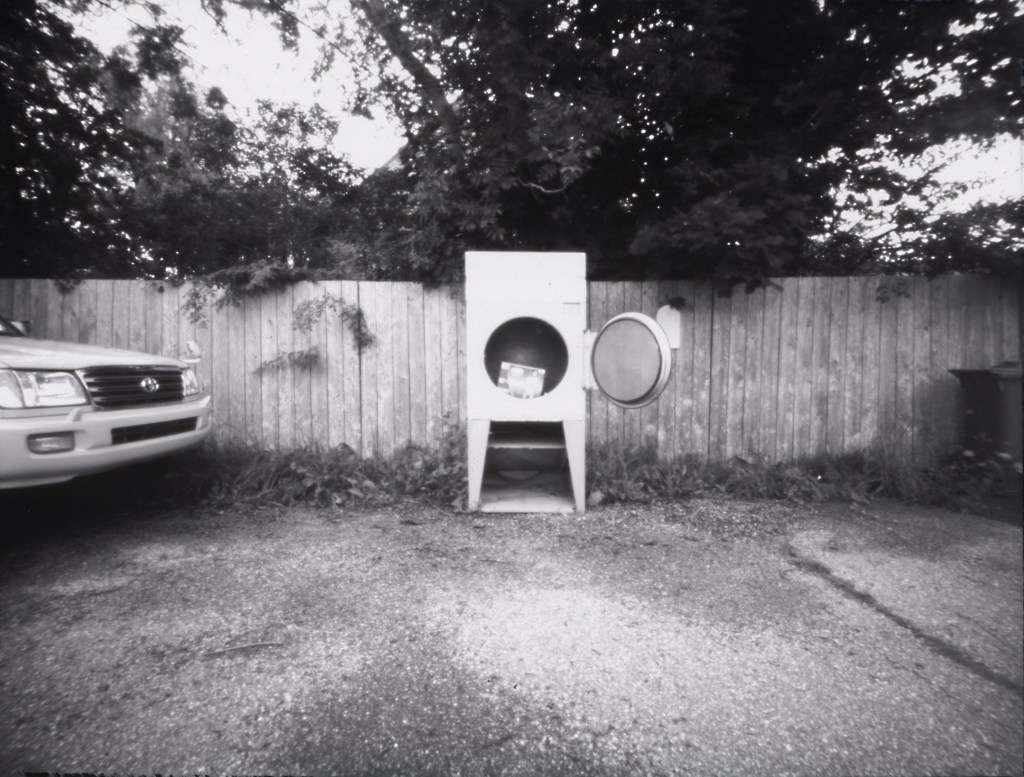
I’m interested in how nature, time, and slow photography come together, especially through cameraless techniques like pinhole, lumen, photogram, and cyanotype. I also use printmaking and drawing to make images. I work with botanical elements and b&w photographic paper or film as part of the image-making process. By placing plant leaves, flowers, and roots directly on unexposed paper or film and then exposing them to ultraviolet light, I can coax delicate and sometimes surprisingly colourful marks suggesting impressions of the plants themselves.
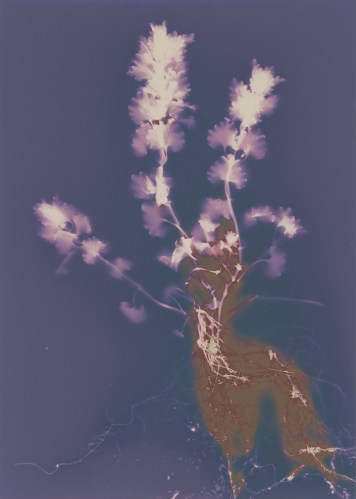
My art is shaped by the places I live in, which are rural and always changing. I’ve been paying close attention to plants that grow in the overlooked, in-between spots—like ditches, construction sites, or clear-cut areas. I think about how nature keeps finding a way to grow and change in these spaces. Often, my work starts with just standing quietly and watching the light, shadows, and small details that might easily be missed. It’s about slowing down and letting the image reveal itself over time.
What draws me to photography is its physical and chemical nature—there’s something special about working with actual materials and processes that go beyond just snapping a picture. Using experimental, historical techniques like alternative photography allows me to work intuitively with my materials. These processes take time and don’t yield predictable results, making each piece unique in a way digital methods can’t replicate.
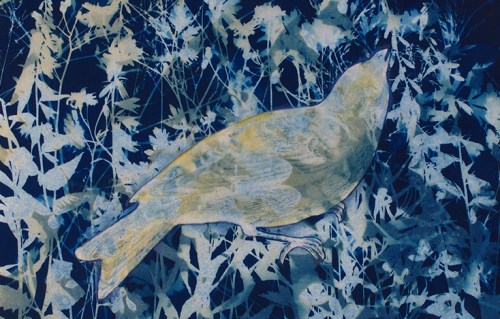
My work intentionally embraces the chance and transformation inherent in the process. Each print represents a moment where nature and light converge, made visible through chemistry and handcraft. This slow, exploratory practice encourages viewers to reconsider the possibilities of photography and to appreciate the quiet beauty found in transient botanical forms.
 bonnie baker studio